Seoul is one of those cities where a snack run can easily turn into dinner. You start with tteokbokki, spot hotteok two stalls later, then end up with fish cake broth in one hand and a skewer in the other.
That’s the fun of Korean street food here. It’s fast, filling, and tied to the markets and neighborhoods where people actually spend time.
Food is now officially a top reason people visit Korea, with culinary tourism participation jumping from 56.5% of visitors in 2019 to 76.8% by 2025, so here are the 15 dishes worth hunting in 2026.
The Best 15 Street Food Dishes in Seoul
We advise you to start with the classics and build from there.
1. Tteokbokki: The Classic
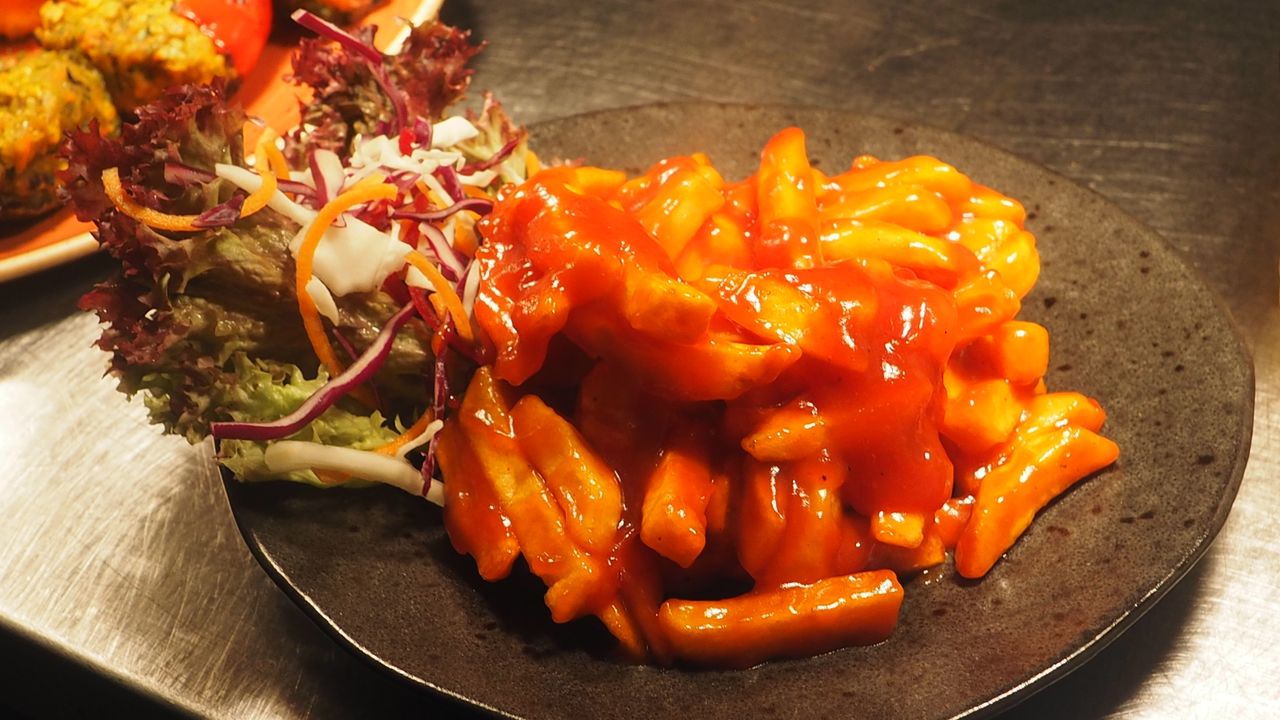
If you try one street food, make it tteokbokki. The rice cakes are chewy, and the sauce hits sweet and spicy at the same time. It costs around 3,000 to 5,000 won (USD 2.18 to USD 3.63) per serving at tent stalls and slightly more in markets.
The modern gochujang version was born in Sindang-dong in the 1950s, where the original tteokbokki alley still simmers decades-old broth bases, and 2026’s trendy twist is rose tteokbokki, creamed into something like Korean carbonara.
2. Hotteok: The One That Burns Your Tongue
Hotteok can be described as a disc of dough griddled in oil around a filling of brown sugar, cinnamon, and seeds that liquefies into lava. That first bite is always the test of whether it’s too hot for you or not. It costs around 2,000 won (USD 1.45), with upgraded versions such as gorgonzola hotteok at 3,000 won (USD 2.17).
The stalls near Namdaemun Market’s Gate 2 are the connoisseur’s stop, and the savory japchae hotteok, stuffed with glass noodles and vegetables, has become the sweet version’s serious rival.
3. Bindaetteok: The Gwangjang Staple
Bindaetteok is the smell you notice before you even spot the stall. It’s a mung bean pancake, fried on a wide griddle until the edge gets crisp and the center stays soft. It costs around 5,000 won (USD 3.62), but prices vary by stall. For a great experience: order one pancake, one bowl of makgeolli rice wine, and a seat at the communal tables while the griddles roar around you.
4. Mayak Gimbap: Small Rolls, Fast Finish
Costing around 3,000 won (USD 2.17), mayak gimbap is easy to underestimate. The rolls are small and plain-looking, but they’re gone in minutes, and that’s the point! They’re made for quick bites between richer foods, and they work best when you share a plate and move on to the next stall.
5. Eomuk: Fish Cake and Hot Broth
A skewer of fish cake in broth is one of the easiest things to eat on the move. It’s cheap comfort food, and in cold weather it’s hard to beat. You’ll pay around 2,000 to 3,000 won (USD 1.45 to USD 2.17) per skewer. If the stall has broth cups out, that’s your sign to help yourself and warm up before you keep walking.
6. Twigim: The Fried Add-On You Didn’t Plan to Order
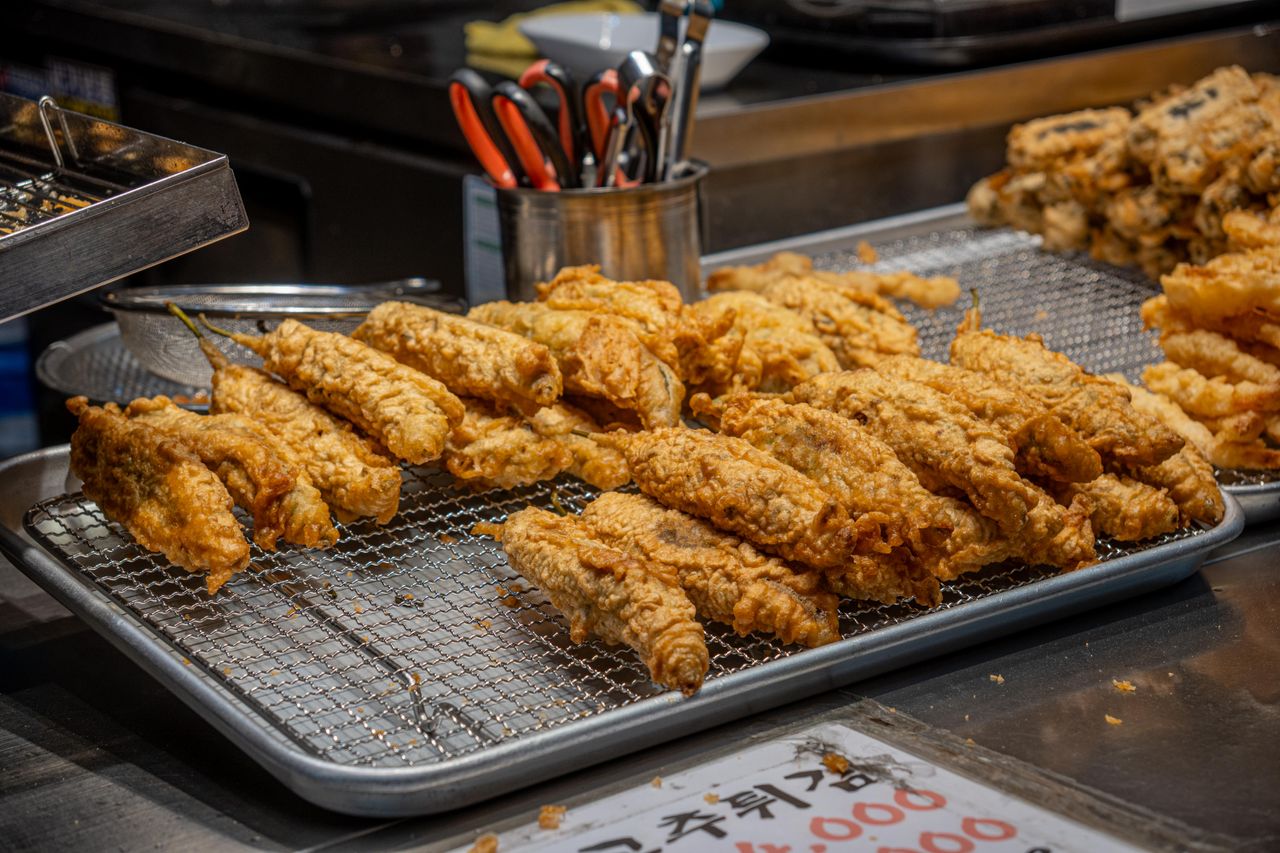
Twigim is the thing people add after saying they’re done ordering. Squid, vegetables, dumplings, seaweed rolls, and boiled eggs all show up in the same tray. If you’re with other people, this is one of the easiest shared orders in the market. Expect to pay about 1,000 to 2,000 won (USD 0.72 to USD 1.45) per piece, or about 6,000 won (USD 4.35) for a mixed plate.
7. Sundae: Better Than the Description Sounds
If you’ve never had Korean sundae, ignore the description and try one plate before you decide. Costing around 6,000 to 10,000 won (USD 4.35 to USD 7.25) per portion, it’s sliced, filling, and easy to share. Vendors often plate it with a few extra cuts on the side, which gives you a fuller taste of the stall without a huge bill.
8. Gyeranppang: Breakfast in One Hand
Gyeranppang is a sweet little loaf baked around a whole egg. For about 1,500 won (USD 1.09), you’ll get a warm, custardy comfort that’s perfect on cold mornings outside university districts and subway exits. This is a street snack that works as an actual breakfast.
9. Bungeoppang: Seoul’s Winter Check-In
Bungeoppang are fish-shaped waffles filled with red bean paste (or custard, or nutella in rebel stalls), sold for 1,000 won each (USD 0.72), or 3 for 2,000 won (USD 1.45) at some stalls, from late autumn through winter. Koreans track their price and size so closely that media reports treat the “bungeoppang index” as inflation commentary, and finding a good stall near your hotel is a seasonal victory.
10. Korean Corn Dog: The Crowd-Pleaser
Korean corn dogs lean into excess. Some use sausage, some use cheese, some use both, and the coating can come with potato cubes or sugar. If you want the aesthetic version for photos, Myeongdong is still one of the easiest places to find it. It costs around 3,000 to 4,900 won (USD 2.17 to USD 3.55).
11. Dakkochi and Sotteok Sotteok: The Walking Snacks
These are made for eating on the go. Dakkochi gives you grilled chicken on a stick with sauce that sticks to the glaze. Sotteok sotteok alternates sausage and rice cake, which makes it one of the easiest snacks to spot from a distance. Dakkochi costs around 2,000 to 3,000 won (USD 1.45 to USD 2.17), while sotteok sotteok is around 3,000 to 5,000 won (USD 2.17 to USD 3.62).
12. Tornado Potato: The Old Myeongdong Favorite
This one is pure street-food theater. A whole potato gets spiral-cut onto a skewer, fried, and dusted with seasoning. It became part of the Myeongdong price debate when vendors pushed it to 5,000 won (USD 3.62), then later cut it to 4,000 won (USD 2.90) after the backlash.
13. Kkultarae: Candy as a Street Show
Kkultarae works because half the appeal is watching it get made. Vendors stretch the candy again and again until it turns into thin threads, then wrap it around nuts. Even if you don’t buy a box, it’s worth stopping for the demo. It’s around 7,000 to 8,000 won (USD 5.07 to USD 5.80) per box.
14. Dalgona: The Old Candy That Went Global
Dalgona got a fresh wave of attention after Squid Game, but in Seoul it still works as an old-school snack. The candy is thin, sweet, and a little fragile. If a stall offers the cut-out challenge, try it out for fun! It costs around 3,000 to 5,000 won (USD 2.17 to USD 3.62) in tourist areas.
15. Mandu: End With Dumplings
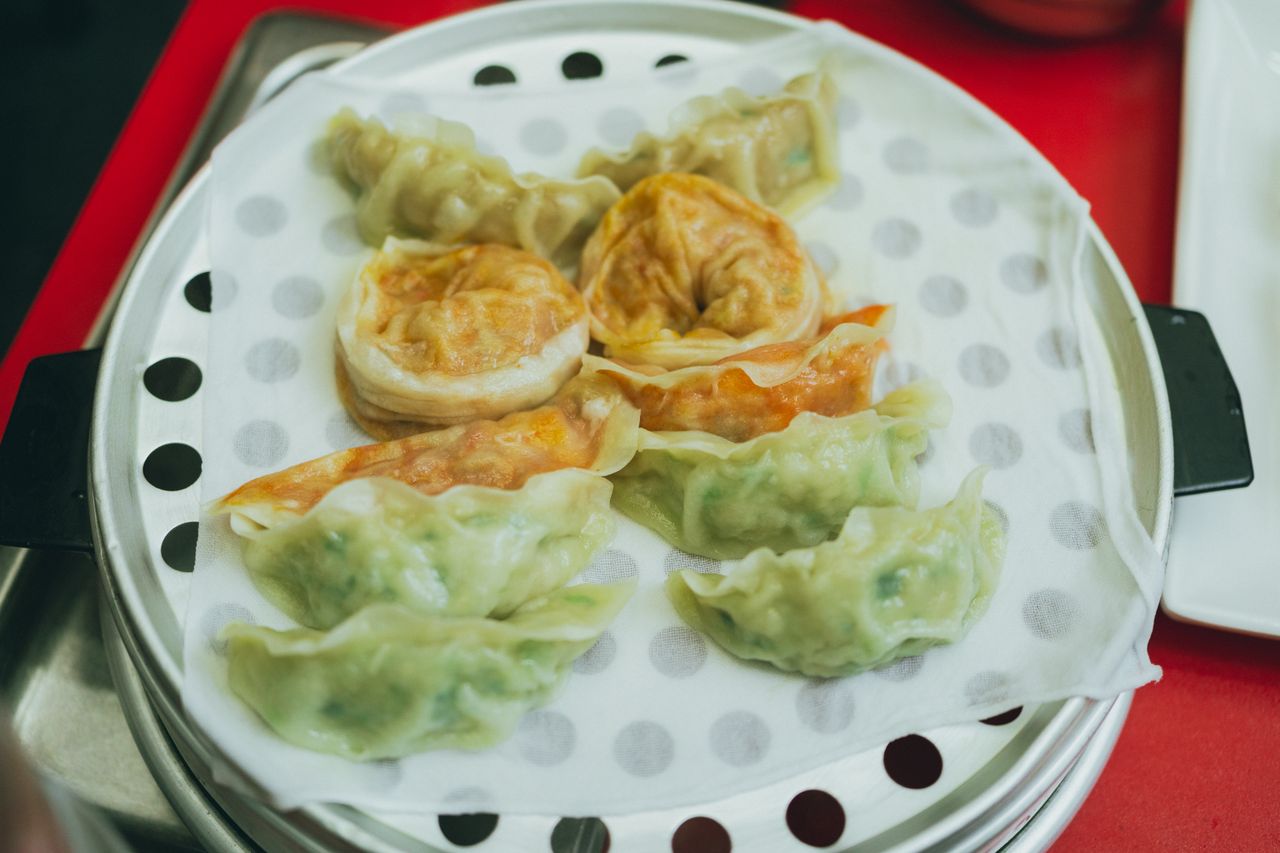
If you want something that feels closer to a meal, mandu is the safe pick. Go for steamed if you want a softer finish, fried if you want crunch. In areas like Myeongdong, fried dumplings became another pricing flashpoint, with some stalls cutting them from 5,000 won (USD 3.62) to 4,000 won (USD 2.90) after criticism.
A One-Day Street Food Route
If you’ve got one day, don’t try to do everything at once. Seoul gives you better food when you pace it.
Start at Tongin Market near lunch. The yeopjeon lunchbox setup is built for small portions, which makes it the best first stop when you want range without burning out early. Get there in time for the lunchbox cafe hours, then walk around Seochon or toward Gyeongbokgung after you eat.
Head to Gwangjang in the afternoon. This is the time to split bindaetteok, look for gimbap, and take the market in without dinner-hour pressure. Just keep one rule in mind: read the price board before you order.
Use the evening for either Myeongdong or Namdaemun, depending on what you want. Pick Myeongdong if you want range, lights, and a lot of choices in one pass. Pick Namdaemun if hotteok is the main event. If you eat with some restraint, a full day can still land around 30,000 to 40,000 won (USD 21.74 to USD 28.99), though Myeongdong can push that higher fast.
Follow These Korean Street Food Unwritten Rules
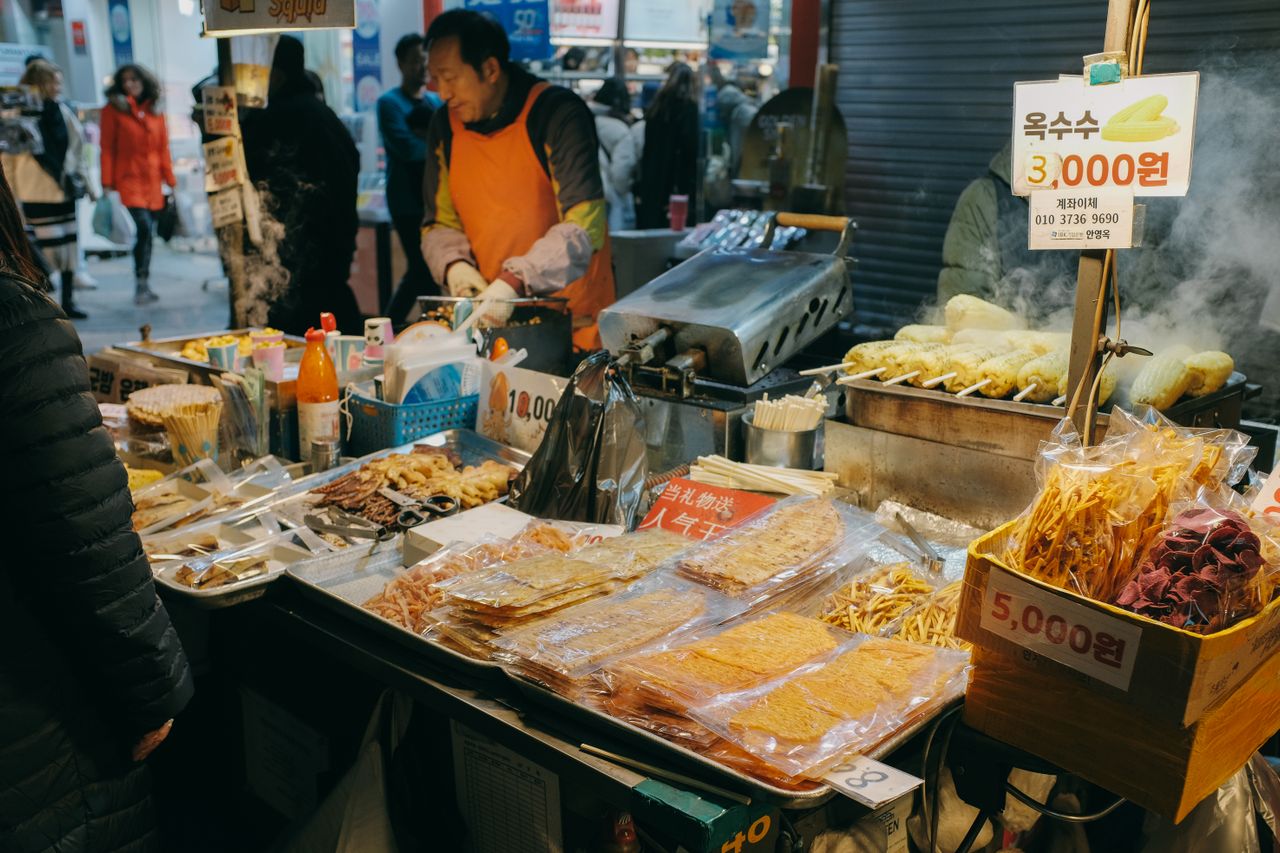
Check the menu board before you point at anything. That matters most in Gwangjang and Myeongdong, where recent Korean reporting shows how much prices can vary from stall to stall.
Bring some cash, even if many stalls now take cards. Keep your order simple when the line is moving. Return trays, cups, and skewers where the stall wants them. If you don’t eat seafood, ask about broth and sauce before you buy, because many savory bases in Korea still lean on fish or shellfish stock.
And don’t order too much at the first stall. Seoul street food works best when you leave room for the next thing.